
MQTT Sensor Dashboard on Raspberry Pi
Subscribe to any MQTT topic and get real-time charts, threshold alerts, edge PID, and historical analytics out of the box. mosquitto on the Pi + Configurator + cloud dashboard — pre-integrated.
How the data flows
- 1. Sensor publishes MQTT. Any ESPHome / Tasmota / Shelly / custom-firmware device publishes to the Pi's local mosquitto broker.
- 2. Configurator subscribes. The browser-based Configurator subscribes to whatever topic pattern you choose; generated Node-RED flows live on the Pi.
- 3. Pi runs the logic. Threshold alerts + edge PID + recipe automation run locally — process control survives an ISP outage.
- 4. Cloud dashboard. Telemetry streams to the cloud via Tailscale tunnel + WebSocket; dashboards, history, alerts surface in a browser anywhere.
Any MQTT-speaking source
Sensors that already publish over MQTT show up in LoopString without firmware changes.
ESPHome / Tasmota / Shelly
Battery + WiFi sensor nodes publishing temperature, humidity, motion, switch states.
shellies/shelly-1pm/relay/0Home Assistant MQTT bridge
HA devices that publish via the MQTT broker; LoopString can subscribe to the same topics.
homeassistant/sensor/grow_room_temp/stateIndustrial PLCs via MQTT gateway
Modbus / S7 PLCs bridged through an OPC-UA or MQTT-Sparkplug gateway.
spBv1.0/factory_a/DBIRTH/line_1Custom Python / Node.js publishers
Custom telemetry from any script that imports an MQTT client library.
lab/bench-3/spectrometer/wavelengthPi-native sensors via Configurator
I²C / 1-Wire / GPIO sensors wired directly to the Pi — published locally for consistency.
loopstring/{deviceId}/sensors/sht31-bench/temperatureUpstream cloud brokers
AWS IoT, EMQX Cloud, HiveMQ Cloud — bridged via the Pi-side broker.
aws-iot/{thing_name}/shadow/update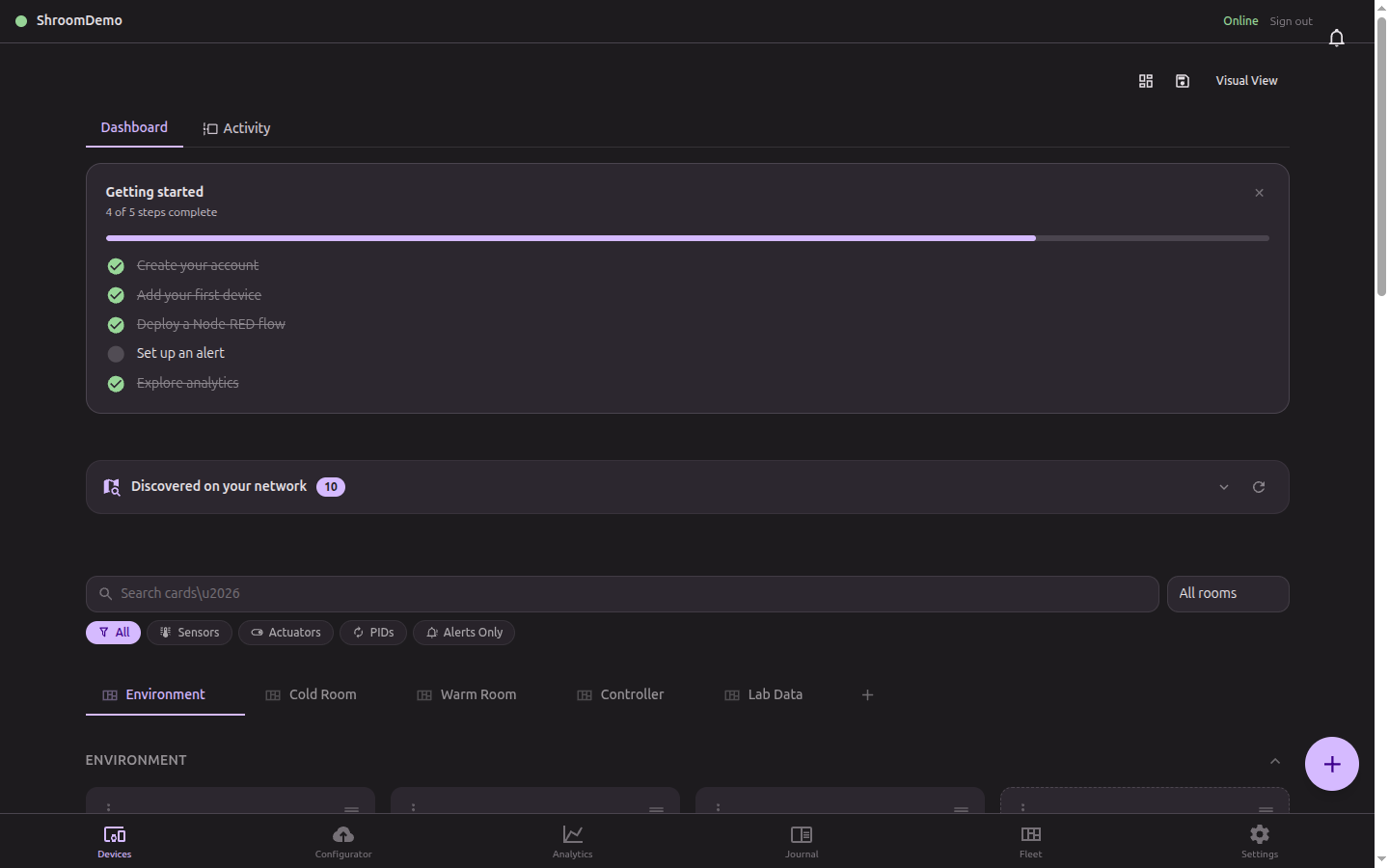
Key Takeaways
- LoopString runs mosquitto on the Pi as the local MQTT broker — your sensors publish over MQTT without leaving the LAN.
- The Configurator subscribes to any topic + emits a real-time dashboard, threshold alerts, and edge PID on the same data.
- Bridge upstream brokers (Home Assistant MQTT, AWS IoT MQTT, ESPHome) — Pi-side flow can mirror topics across.
- No firmware to write — sensors that already speak MQTT just publish + show up in the parts library.
- Cloud history + dashboard sharing on top of the local broker — best of both worlds.
See how LoopString compares to other MQTT-flavoured platforms
vs ESPHome
Pi as cloud platform reading from your ESP32 nodes.
See the comparison →vs ThingsBoard
Cloud-hosted instead of self-hosted PostgreSQL + Kafka.
See the comparison →vs Ubidots
Assembled platform vs cloud dashboard + ingest.
See the comparison →vs Particle.io
Pi-based for facility operators vs cellular for product OEMs.
See the comparison →Ready to dashboard your MQTT topics?
Start free — no credit card required.