Node-RED vs. Home Assistant vs. LoopString: When to Use What
By LoopString Team
If you are building an IoT project, you have probably encountered Node-RED, Home Assistant, and wondered which one to use. This is an honest comparison — including where LoopString fits and where it does not.
The Short Version
- Node-RED — Maximum flexibility, steep learning curve, no built-in dashboard persistence or cloud sync
- Home Assistant — Massive smart-home ecosystem, excellent integrations, limited industrial/sensor use cases
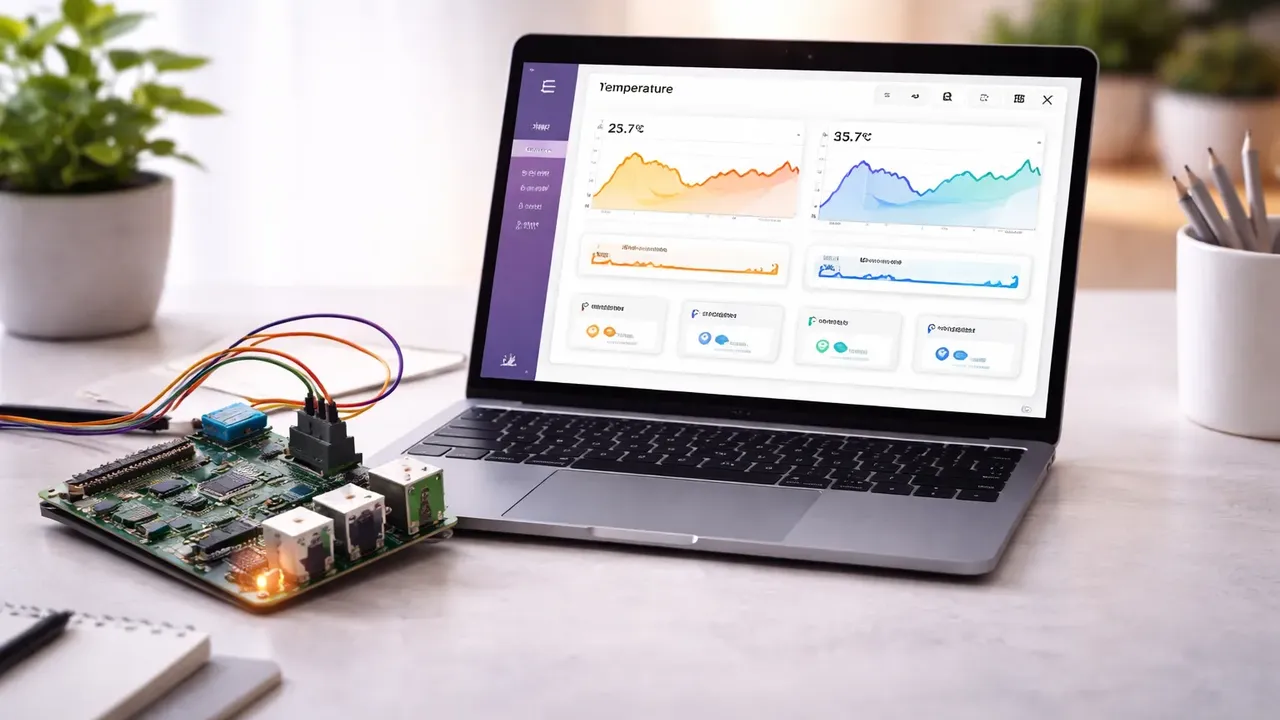
- LoopString — Cloud-first IoT dashboard with visual configuration, edge PID control, and remote access. Best for sensor monitoring, process control, and multi-device management
Node-RED: The Flexible Powerhouse
Node-RED is a flow-based programming tool originally built by IBM for IoT. It runs on a Raspberry Pi and lets you wire together hardware, APIs, and services using a visual editor.
Strengths
- Unlimited flexibility — If you can imagine it, you can probably wire it in Node-RED
- Huge node library — Thousands of community-contributed nodes for every protocol and service
- Runs anywhere — Pi, server, cloud, container
- Free and open source — No subscription, no vendor lock-in
Weaknesses
- No built-in cloud dashboard — The Node-RED dashboard is local only. Accessing it remotely requires VPN or port forwarding.
- No user management — No accounts, no roles, no sharing
- No persistence layer — Historical data requires setting up InfluxDB, MQTT brokers, and Grafana yourself
- Manual everything — Every flow is hand-built. No parts library, no templates, no one-click deploy.
- Steep learning curve — Powerful but complex for non-developers
Best For
Prototyping, custom integrations, developers who want complete control, one-off projects where you do not need remote access or historical data.
Home Assistant: The Smart Home King
Home Assistant is the dominant open-source home automation platform. It runs on a Pi (or dedicated hardware) and integrates with thousands of consumer smart home devices.
Strengths
- Massive integration library — Over 2,000 integrations: Zigbee, Z-Wave, Wi-Fi devices, cloud services
- Polished UI — Modern dashboard with cards, graphs, and automation builder
- Strong community — Active forums, add-on store, custom components
- Voice assistant support — Works with Alexa, Google Home, Apple HomeKit
- Remote access — Nabu Casa subscription provides cloud tunnel ($6.50/mo)
Weaknesses
- Consumer-focused — Designed for smart light bulbs and thermostats, not industrial sensors or custom hardware
- Limited sensor support — No native support for I2C, 1-Wire, UART, or SPI sensors without ESPHome or custom integrations
- No PID control — Built-in thermostat is on/off only. PID requires custom add-ons.
- Single-device — Designed for one central hub. Multi-site deployments are not a core use case.
- YAML configuration — Advanced automations still require editing YAML files
Best For
Smart home automation, consumer device integration, voice-controlled setups, Zigbee/Z-Wave ecosystems.
LoopString: Cloud IoT for Process Control
LoopString is a cloud-connected IoT platform designed for sensor monitoring, actuator control, and process automation. It uses Raspberry Pi for edge computing with Node-RED under the hood.
Strengths
- Cloud-first dashboard — Access your data from anywhere, any device, no VPN needed
- Visual Configurator — Drag-and-drop flow builder with parts library and project templates
- Edge PID control — PID loops run on the Pi for safety and low latency, not in the cloud
- Multi-device management — Multiple Pis, device groups, fleet overview, mesh networking
- Real-time + historical — Live data straight from the device over EdgeTransport (on-Pi SQLite, read over Tailscale) plus long-term cloud storage and analytics
- Sensor-native — Built-in support for I2C, 1-Wire, UART, SPI, ADC, and industrial protocols (Modbus, S7comm)
- Zero-code deployment — Configure, click Deploy, done
Weaknesses
- Requires internet — The dashboard needs connectivity (though PID and local control continue offline)
- Smaller integration library — No Zigbee, Z-Wave, or consumer smart home device support
- Subscription pricing — Free tier is limited to 1 device; scaling requires a paid plan
- Pi-centric — The edge device is a Raspberry Pi (with Arduino/ESP32 via gateway)
Best For
Sensor monitoring, environmental control, PID-based process automation, grow rooms, fermentation, aquaponics, industrial monitoring, multi-site deployments.
Head-to-Head Comparison
Remote Access
- Node-RED: Requires manual VPN or port forwarding setup
- Home Assistant: Nabu Casa cloud tunnel ($6.50/mo) or manual setup
- LoopString: Built-in cloud dashboard, plus Tailscale VPN for SSH access
PID Control
- Node-RED: Possible with community PID nodes, manual configuration
- Home Assistant: Not built in. Requires custom add-ons.
- LoopString: Built-in PID with visual configuration, runs on Pi edge
Multi-Device
- Node-RED: Each Pi is an island. No built-in coordination.
- Home Assistant: Single hub model. Remote instances are separate.
- LoopString: Multi-device dashboard, device groups, mesh networking, fleet overview
Sensor Support
- Node-RED: Excellent — any sensor with a community node
- Home Assistant: Consumer devices excellent; raw sensors require ESPHome
- LoopString: Native I2C, 1-Wire, UART, ADC, Modbus, S7comm with parts library
Dashboard Sharing
- Node-RED: Not possible without custom development
- Home Assistant: Limited sharing via Nabu Casa
- LoopString: Public read-only share links with room filtering and expiration
Setup Time
- Node-RED: Hours to days depending on complexity
- Home Assistant: 30 minutes for basic setup, hours for advanced
- LoopString: 30 minutes from unboxing to live dashboard
When to Use Which
Choose Node-RED when:
- You are a developer who wants maximum control
- You need a unique integration that no platform supports
- You do not need remote access or cloud dashboards
- Budget is zero and you have unlimited time
Choose Home Assistant when:
- You are automating a smart home with consumer devices
- Zigbee, Z-Wave, or Wi-Fi device support is critical
- Voice assistant integration matters
- You want a large community and add-on ecosystem
Choose LoopString when:
- You need cloud dashboards accessible from anywhere
- You are monitoring environmental sensors (temperature, humidity, CO2, pH)
- PID control is required for your process
- You manage multiple Raspberry Pi devices across locations
- You want zero-code deployment with a visual configurator
- You need alert notifications and historical analytics
Can You Combine Them?
Yes. LoopString uses Node-RED under the hood on the Pi. If you need a custom Node-RED node for a niche sensor or protocol, you can install it alongside LoopString's managed flows. The Configurator handles the standard parts, and Node-RED gives you an escape hatch for everything else.
Home Assistant and LoopString serve different niches and can coexist. Use Home Assistant for your smart home (lights, locks, media) and LoopString for your sensor monitoring and process control (grow room, brewery, workshop).
Try LoopString
Create a free account and build your first IoT dashboard in 30 minutes. The free tier includes 1 device, 8 sensor slots, and full Configurator access. See our 30-minute tutorial to get started.
Learn More
- Platform Overview — what LoopString does and how it works
- Configurator Overview — visual flow builder
- Protocol Bridges — MQTT, Modbus, S7comm integration
- Edge vs. Cloud PID Control — why edge processing matters
Frequently asked questions
Pick Node-RED if you are a developer who wants maximum control and do not need remote access or cloud dashboards. Choose Home Assistant for smart-home automation with consumer devices like Zigbee, Z-Wave, and voice assistants. Choose LoopString when you need a cloud dashboard accessible anywhere, are monitoring environmental sensors, require PID control, or manage multiple Raspberry Pi devices across locations.