
Cheese Cave Aging Monitoring & Control
Hold every affinage cave inside its T/RH window for weeks to years — with edge-PID control loops, anomaly detection on failing equipment, and FSMA-grade compliance records for the inspector.
Active fermentation (kombucha, miso, kraut)? See the fermentation page.
The Problem
A 1 °C drift over a week ruins months of work
Aging cheeses live in narrow T/RH windows for weeks to years. An overnight excursion is catastrophic — and not always visible until you cut a wheel and find off-flavours or unwanted mould.
Manual temperature checks and paper log sheets
A walk-through with a thermometer is hours per week, and produces gaps on weekends and holidays — exactly when failures matter most.
No remote visibility into multi-cave operations
Commercial cheesemakers run distinct caves for different styles (bloomy-rind, washed-rind, hard alpine, blue). No single picture of what is happening across every cave.
FDA / FSMA inspectors expect continuous records
Commercial cheesemaking falls under FSMA Preventive Controls for Human Food. Inspectors expect continuous temperature + humidity logs with timestamps — not retroactive clipboard entries.
How LoopString Solves It
Edge-PID temperature + humidity loops per cave
On-Pi PID loops drive refrigeration relays, glycol valves, and humidification systems to hold each cave inside its setpoint band. Process control survives ISP outages, power flickers, and cloud incidents.
Multi-cave dashboard with sparkline trends
See every cave — bloomy-rind, washed-rind, hard alpine, blue — on one screen with T, RH, and (optionally) CO₂ trend lines. Spot drift weeks before it becomes a problem.
Threshold + anomaly alerts before product is at risk
Configure narrow alert windows per cave style. Anomaly detection catches failing equipment — a refrigeration compressor losing efficiency shows up as baseline drift before the cave actually warms.
FSMA-grade compliance records and affinage logs
Every reading is logged with a timestamp and exportable as a HACCP / FDA / FSMA-style PDF report. Lot-traceable affinage logs per cave for chain-of-custody and recall readiness.
Built for these affinage operators
Bloomy-rind cheeses
Brie, Camembert, Robiola — narrow 11–14 °C / 90–95% RH window for proper Penicillium camemberti growth.
Washed-rind cheeses
Taleggio, Époisses, Limburger — high-humidity caves (95–98% RH) with regular brining schedules; B. linens needs warmth and moisture.
Hard alpine + tomme
Gruyère, Comté, Beaufort — cool caves (10–12 °C) for 6 to 24 months; small T drift compounds across a long aging cycle.
Blue cheeses
Roquefort, Stilton, Gorgonzola — distinct caves with airflow for Penicillium roqueforti development.
Goat + sheep cheeses
Chèvre, Pecorino, Manchego — style-specific T/RH profiles + per-cave separation to prevent cross-contamination.
Multi-style commercial creameries
Multi-cave operations need distinct setpoints per cave + a single audit-ready record for FSMA inspections.
Hardware You'll Use
SHT31
Combined T + RH per cave — the workhorse sensor
I²CDS18B20
Spot temperature probes (wheel-level, glycol return)
1-WireMH-Z19B
NDIR CO₂ sensor for washed-rind humidity caves
UARTRelay module
Refrigeration + humidification + airflow control
GPIO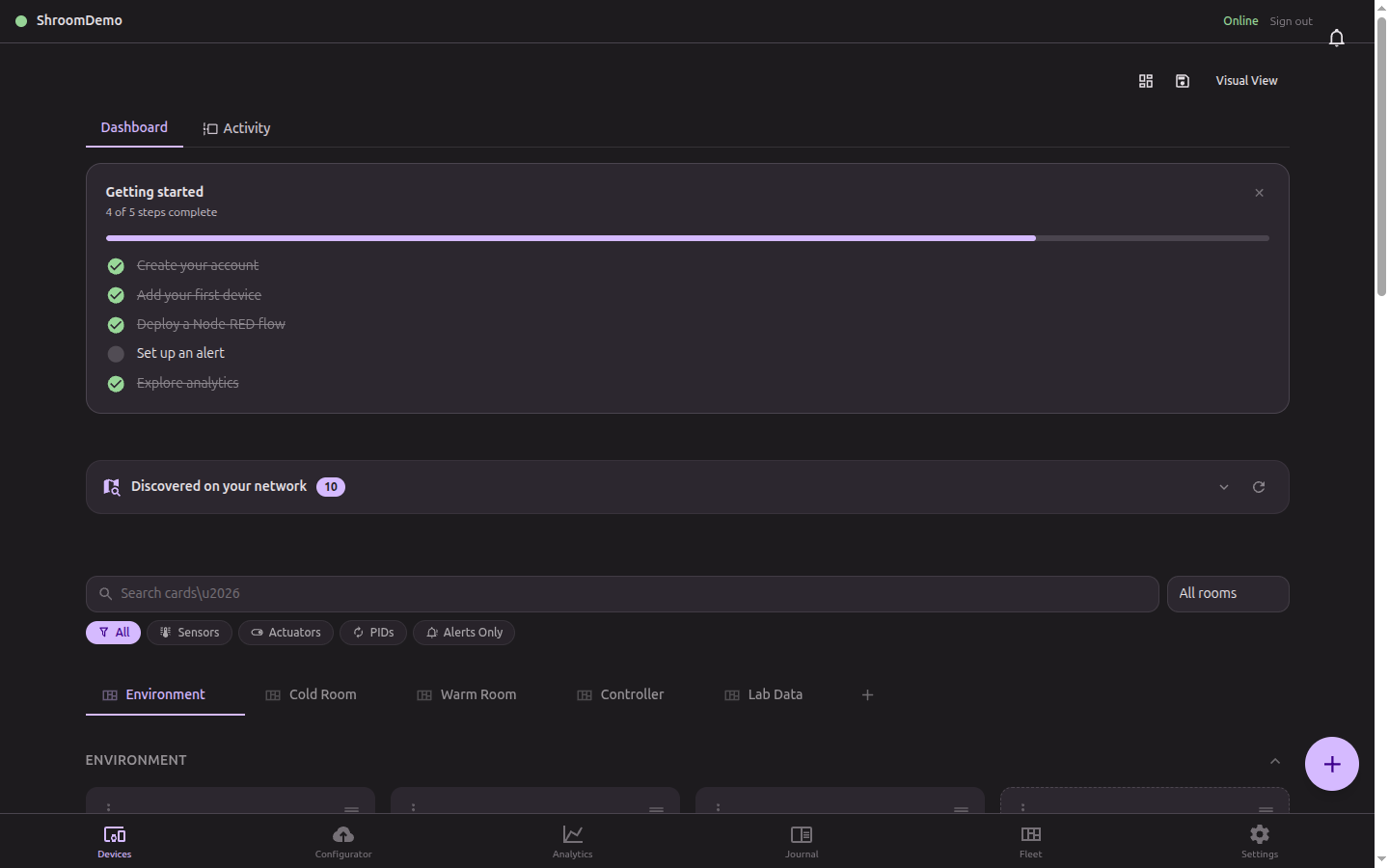
Free tools for this work
Frequently asked questions
- Can LoopString hold the tight temperature and humidity a cheese cave needs?
- Yes. It controls a cooling relay and humidifier/dehumidifier from the Pi to hold a narrow band — typically around 10–13 °C and 80–95% RH depending on the style — and alerts you the moment either drifts out.
- Will it keep a compliance-grade record of aging conditions?
- Yes. LoopString logs temperature/humidity history with timestamps suitable for HACCP/FSMA-style records, and can generate reports per cave or per lot. History is stored durably in the cloud; live control stays on the Pi.
- What happens to my cave if the internet goes out?
- Control and alerting keep running. The Pi holds setpoints and switches relays locally, and buffers history until the connection returns — remote access over Tailscale simply resumes when you are back online.
Ready to put eyes on every wheel?
Start free — no credit card required.