
You went to bed with a perfect tray
By morning it's a spreading dead zone — and a 2-week cycle leaves no time to replant. LoopString flags the tray first.
Longer-cycle cultivation? See generic grow rooms. Mushroom-specific? See mushroom cultivation.
What actually loses a tray
A 2-week cycle has no margin
Microgreens flip from seed to harvest in days. A bad night during blackout or the fluff stage drops a tray's yield for good — and you can't replant fast enough to make the delivery.
The top shelf is not the bottom shelf
A four-shelf rack can run a different cultivar at a different stage on every level. One sensor at the room level misses what each tray, on each shelf, actually sees.
Too wet molds, too dry burns
“How much water is too much, and when is it not enough?” Aim a fan to fight the mold and you windburn the tray; back it off and it damps off. LoopString watches the humidity swing so you catch the drift before the tray does.
Chefs want uniform trays
Restaurant and grocery buyers want consistency, and some want records. LoopString keeps a timestamped log per cultivar batch, so “every tray the same” has proof behind it.
How LoopString Solves It
Blackout to harvest day, hands-off
Recipes flip the rack from germination (dark, high RH) to fluffing to harvest day on their own clock. Nothing to reset on a wall timer when you switch cultivars.
Every rack on one screen
Track each rack — and each shelf where you put a sensor — in one view. Sparkline trends per cultivar lot, with the light and misting schedule overlaid so you can see when it actually fired.
A flag before the tray is gone
Alerts on the windows that lose trays: a humidity spike overnight, a misting pump that stopped, a blackout-stage drift. You hear about it while the loss is still one tray.
Per-batch records buyers ask for
A per-lot log of the conditions each cultivar batch grew in, exported as a PDF for the restaurant and grocery buyers who ask for it.
Built for these microgreens operators
Commercial microgreens producers
Multi-rack indoor producers selling to restaurants, grocery, and farmer markets — typically 50–500 trays/week.
Restaurant-supplied operators
Producers under 1,000 trays/week supplying local chefs, who need per-batch records and reliability that beats their last paper-log incident.
Vertical-farm microgreens lines
Larger vertical-farm operations running microgreens as one of several crops, who need per-shelf-row monitoring and multi-room dashboards.
School + research microgreens programs
Educational and research programs that need clean per-cultivar logs for teaching and thesis defensibility.
Specialty cultivars + heirloom seed work
Niche cultivar producers (purple radish, sunflower, sango, fenugreek) who run per-cultivar timing that differs from the mainstream crops.
Wholesale + ghost-kitchen suppliers
Producers supplying ghost-kitchen aggregators who need batch-to-batch consistency with audit-ready records.
Hardware You'll Use
SHT31
Temperature + humidity per rack (or per shelf row)
I²CDS18B20
Spot temperature near the canopy
1-WireLight sensor (LDR/BH1750)
Confirm the lights actually fire when scheduled
I²C / AnalogRelay module
Switches lights, the misting pump, and the dehumidifier
GPIO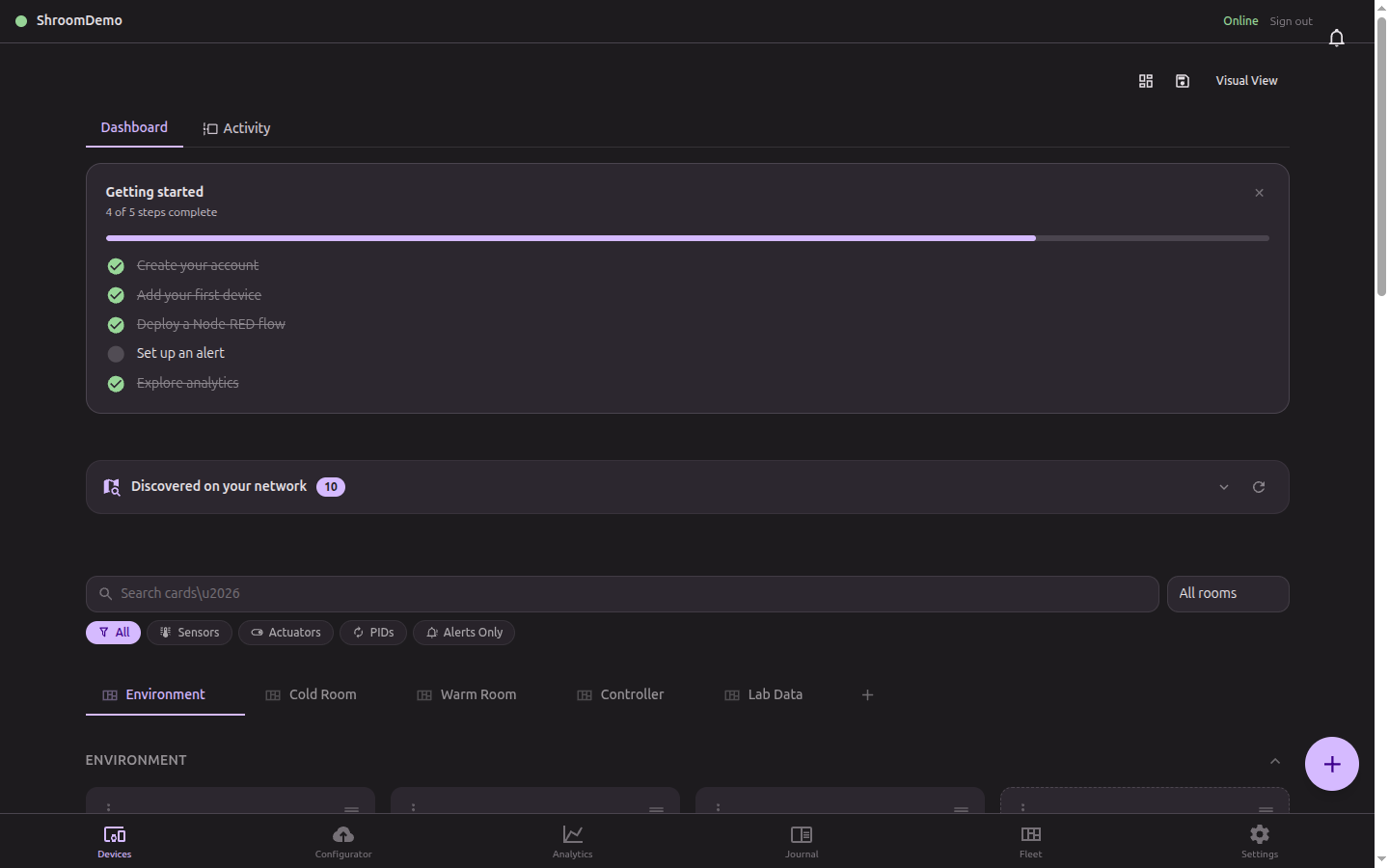
Free tools for this work
Frequently asked questions
- Can LoopString automate a microgreens grow environment?
- Yes. It controls temperature, humidity, and irrigation/misting relays from the Pi and holds the tight, consistent conditions fast crops need, with schedules for light and watering.
- Can it track conditions across multiple racks or tents?
- Yes. Each rack or zone is its own set of cards with independent limits, rolled up into one dashboard, so a large grow is manageable from a single view.
- Do I need food-safety records for microgreens?
- If you sell into channels subject to FSMA, LoopString’s timestamped environmental history and reports help evidence your conditions. The record is durable in the cloud; control stays on the device.
Ready to catch the tray before morning?
Start free — no credit card required.