
Wine-Making Monitoring & Control
Hold every fermenter to its target curve. Keep barrel rooms inside their T/RH window for a year at a stretch. Generate vintage-level environmental records — for sommelier tech sheets, distributor QA, and TTB / state regulator audits.
Brewing instead? See the brewing page. Long-term aging is more like a cheese cave? See cheese cave aging.
The Problem
Fermentation temps make or break a vintage
Red ferment held 5 °C above target for two days produces volatile esters that no winemaker wants. White ferment that climbs from 14 °C to 22 °C overnight strips delicate aromatics. Get it wrong once and a vintage is compromised.
Barrel rooms drift over months
A barrel room held outside the 12–16 °C / 70–80% RH window loses wine to evaporation, oxidises faster, and develops Brett. Spot-checking once a day is not enough across a year of aging.
No visibility across the production line
Crush pad, ferment tanks (red + white in separate areas), MLF tanks, barrel rooms, bottle storage — each has different targets. No single dashboard means no early warning.
TTB / state regulator records get pulled
TTB compliance and state alcohol regulators occasionally request production records. Fermentation logs + barrel-room conditions + transfer records are part of the audit trail. Paper logs have gaps.
How LoopString Solves It
Edge-PID tank temperature control
On-Pi PID drives jacket-cooling or glycol valves on each tank — reds at 24–30 °C cap, whites at 14–18 °C, MLF at 18–22 °C. Control survives any ISP outage during crush season.
Tank + barrel-room dashboard
See every fermenter (red + white), MLF tank, barrel room, and bottle-storage room on one screen. Sparkline trends + per-tank annotation overlays for inoculation, cap punch, MLF inoculation, racking.
Alerts on legal + sensory limits
Configure narrow alert windows on fermenter T, MLF T, barrel-room T/RH. Anomaly detection on cooling-jacket performance catches glycol pump degradation weeks before product is at risk.
Vintage-level environmental records
Per-tank ferment curves + barrel-room logs + bottle-storage records exportable as PDF reports. Useful for sommelier tech sheets, distributor QA, and TTB / state regulator records.
Built for these wine operators
Boutique + estate wineries
Single-estate operations with red + white tanks + barrel cave — full vertical from crush to bottle, all in one facility.
Production wineries
Multi-line operations crushing 10,000+ tons/year; need real-time visibility across many tanks + multiple barrel rooms.
Custom-crush facilities
Custom-crush operations producing wine for multiple labels need per-label record-keeping for proprietary processes + audit trail per client.
Sparkling wine producers
Méthode Champenoise / Charmat operations need crisper fermentation temperature control + tirage / disgorgement cellar conditions.
Cidermakers + meaderies
Apple, pear, honey-based fermentations share the same equipment and temperature-control logic as wine; same monitoring story.
Wine storage + warehousing
Bonded warehouses + bottle-storage facilities holding finished wine for distribution need continuous T/RH/light records.
Hardware You'll Use
DS18B20
Waterproof probes inside tanks (red/white/MLF)
1-WireSHT31
Barrel room T + RH workhorse sensor
I²CRTD probe + ADC
High-accuracy ferment probes for sparkling + ice-wine work
AnalogRelay module
Glycol pump + jacket valve + barrel-room HVAC control
GPIO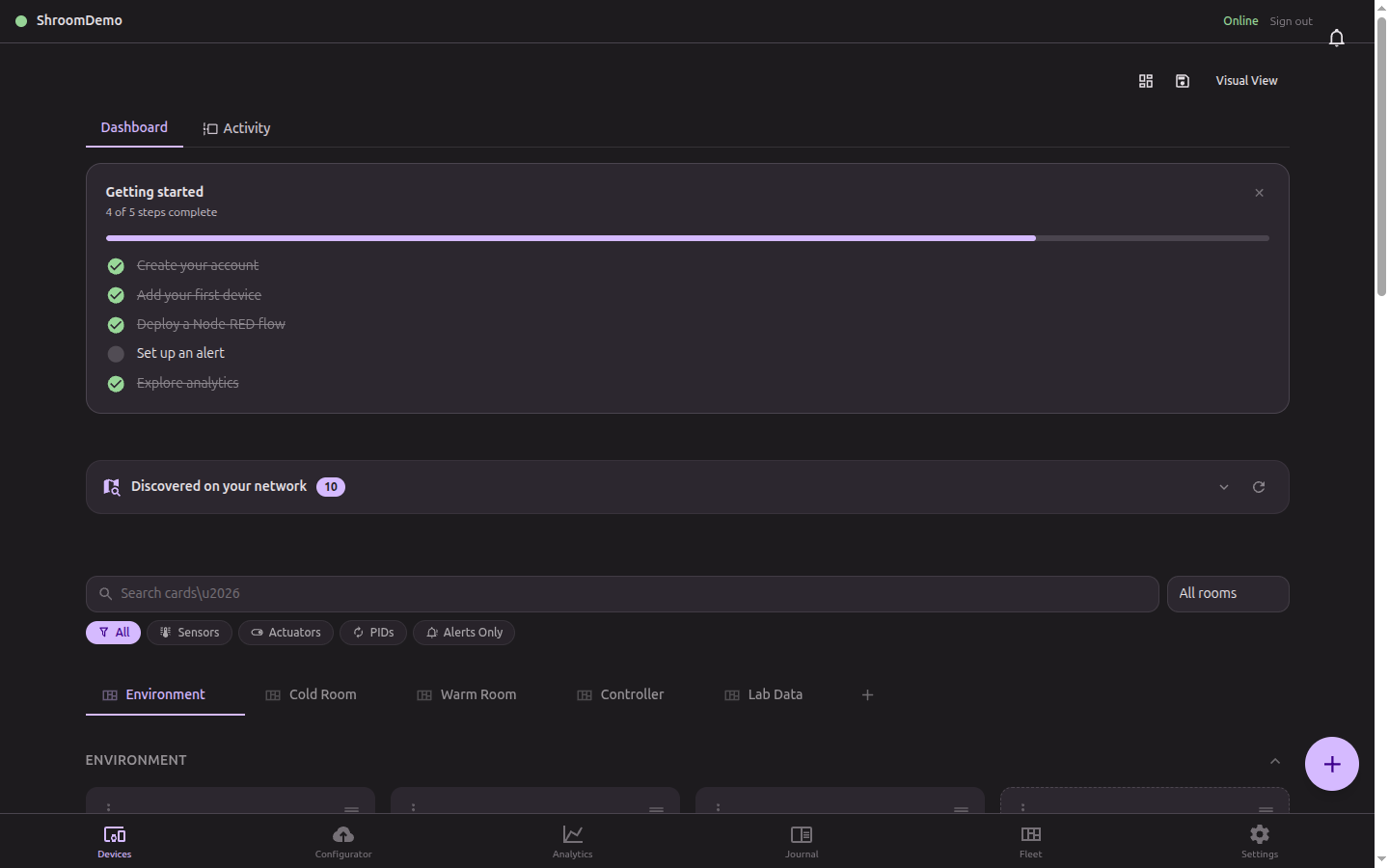
Free tools for this work
Frequently asked questions
- Can LoopString control fermentation temperature for winemaking?
- Yes. A probe in the tank drives an on-Pi loop that switches cooling (or a warming belt) to hold your fermentation temperature, with different targets for reds and whites set from the dashboard.
- Can it manage cellar and barrel-room conditions too?
- Yes. It holds cellar temperature and humidity with relay control and logs the history, so both active ferments and long aging are covered from one system.
- Does it keep records for each tank and vintage?
- Yes. Rolled-up history per tank is stored in the cloud for side-by-side comparison across vintages, while the second-by-second temperature control runs on the device.
Ready to put a sensor in every tank?
Start free — no credit card required.