
Dosing & Circulation Pumps: From Hobby Peristaltic to Industrial Metering Pumps — The Complete Quality-Tier Buyer's Guide
By LoopString Team
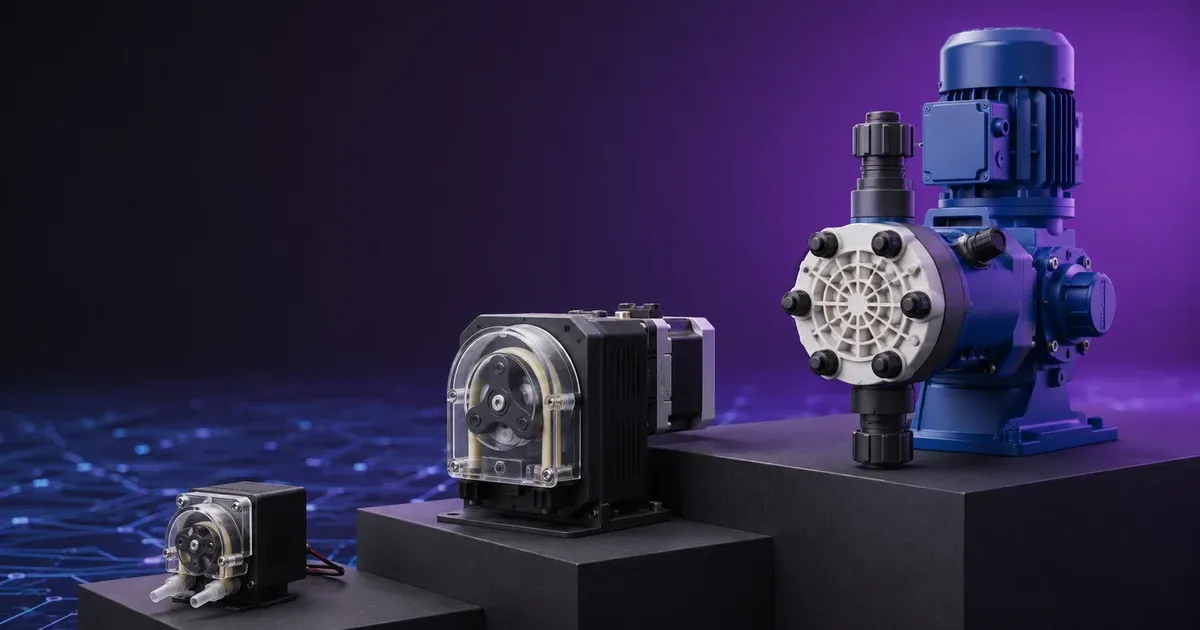
Quick picks by tier. Hobby → a small 12 V peristaltic doser (silicone tube) for dosing, or a DC diaphragm/centrifugal pump for circulation. Maker/Prosumer → a stepper-driven peristaltic with Norprene/PharMed tubing, or a brushless circulation pump. Commercial → a diaphragm metering pump (Grundfos, LMI) with a chemical-resistant head. Hardened industrial / audited → an industrial metering pump (ProMinent, Grundfos DDA) with flow verification and hazardous-area rating. Why each wins is below — but if you just need a name, start there.
The thing that actually bites you: peristaltic dosing drifts as the tube fatigues
The seductive thing about a peristaltic dosing pump is that it's so easy to calibrate: run it for ten seconds, weigh the output, set your mL-per-second, done. The trap is that the calibration doesn't hold. The pump works by a roller squeezing a flexible tube; that tube fatigues, takes a compression set, and loses elasticity over days to weeks, so the volume per revolution quietly falls. Your "1.0 mL/s" becomes 0.85 mL/s and your nutrient or pH dose walks out of spec with nothing visibly wrong. A DC motor that also slows under load or low battery makes it worse. The fix is a stepper-driven pump (constant volume per step) plus quality tubing — and periodic recalibration regardless.
The second trap is chemical compatibility of the wetted path — the tube and the pump head. Cheap silicone tubing is fine for water and nutrients but degrades fast with peroxide, hypochlorite, strong pH-down, and many concentrates; it can also leach. Norprene/PharMed and the right diaphragm/head materials (PVDF, PTFE, Viton) survive aggressive chemistry. Run a strong oxidiser through silicone and you'll be replacing tubing — and chasing dose errors — constantly.
Third: dosing and circulation are different jobs. Dosing wants small, accurate, repeatable volumes (peristaltic or diaphragm metering); circulation wants steady flow and head (centrifugal/diaphragm). Plus the practical realities — self-priming, dry-run tolerance, and back-pressure rating — decide whether the pump survives your plumbing.
So the real question isn't "does it pump my liquid?" — it's "will it still dose the same volume in a month, with a wetted path that survives my chemical?"
The decision axes
- Job: dosing vs circulation — accurate repeatable small volumes vs steady flow at head. Different pump families.
- Dosing accuracy & repeatability — and whether it holds over time (stepper vs DC, tubing fatigue).
- Wetted-path chemical compatibility — tube (silicone vs Norprene/PharMed/Viton) and head (PVDF/PTFE) vs your media.
- Tubing/diaphragm lifespan — the real consumable; how often you replace it and recalibrate.
- Priming, dry-run, back-pressure — self-priming? survives running dry? rated for the system back-pressure?
- Control interface — on/off relay → PWM/step rate → 4-20 mA / pulse / Modbus stroke control.
- Flow & turndown — mL/min range and how finely you can meter at the low end.
- Verification & rating — flow monitoring/feedback and hazardous-area certification for audited dosing.
*TierPumpTypeJobDosing accuracy (holds?)Control***Price (USD)**Best forHobbySmall peristaltic doser / DC diaphragmPeristaltic / diaphragmDosing / circulationApprox; drifts as tube agesSilicone (water/nutrient)On/off, PWM$10–40Hobby hydro, aquariums, fountainsProsumerStepper peristaltic (Norprene) / brushless circ.Stepper peristaltic / BLDCDosing / circulationRepeatable, stable weeksNorprene/PharMedStep rate / PWM$40–150Serious grows, small commercialCommercialDiaphragm metering pump (Grundfos, LMI)Diaphragm meteringChemical dosingAccurate, stroke-controlledPVDF/PTFE/Viton headPulse / 4-20 mA$200–800Water treatment, pools, process pHIndustrialIndustrial metering pump (ProMinent, Grundfos DDA)Metering + flow verifyAudited dosingVerified (closed-loop)Chemical-resistant, rated4-20 mA / Modbus$800–5000+Regulated / safety-critical dosing
Walking up the ladder
Hobby — small peristaltic doser or DC diaphragm/centrifugal ($10–40). A 12 V peristaltic with silicone tube is perfect for hobby hydro nutrient/pH dosing and aquariums; a small DC diaphragm or centrifugal pump moves water for fountains and transfers. Self-priming and cheap — just expect the dose to drift as the tube ages and the chemistry to be limited to water/nutrients. Stop here if it's a hobby reservoir and approximate dosing is fine.
Maker/Prosumer — stepper peristaltic with quality tubing, or brushless circulation ($40–150). A stepper-driven peristaltic delivers repeatable volume-per-step and, with Norprene/PharMed tubing, far longer life and broader chemical tolerance; a brushless circulation pump runs quieter and longer. Calibratable in real mL and stable for weeks. Stop here if you run a serious grow, a small commercial system, or anything you keep records on.
Commercial — diaphragm metering pump (Grundfos, LMI) ($200–800). Purpose-built chemical dosing: a chemical-resistant diaphragm head (PVDF/PTFE), stroke-length and stroke-rate control, accurate and repeatable metering, and 4-20 mA / pulse control inputs. Stop here if you're dosing real chemicals — water treatment, CIP, pools, process pH — and accuracy matters.
Hardened industrial — industrial metering/process pump ($800–5000+). ProMinent, Grundfos DDA, gear/lobe process pumps with digital stroke control, flow verification/feedback, leak detection, and hazardous-area ratings, plus the documentation an auditor wants. You need this tier if dosing is regulated, billed against, or safety-critical and must prove the volume delivered.
Interface & wiring notes (per tier)
- DC peristaltic/diaphragm (12/24 V): drive through a relay or a flyback-protected MOSFET (PWM for rate) — not directly off a GPIO — with a flyback diode across the motor. PWM on a brushed DC motor changes speed , which changes dose, so calibrate at the rate you'll actually run.
- Stepper peristaltic: a stepper driver gives volume-per-step dosing; track steps for an open-loop volume estimate and still recalibrate as tubing ages.
- Metering pump (pulse / 4-20 mA / Modbus): send a pulse train or analog setpoint for stroke rate; many accept a flow-sensor input for closed-loop dosing.
- Protect the pump: add dry-run protection (level switch interlock) and respect the back-pressure rating; a check valve / anti-siphon stops gravity dosing through a stopped pump.
A note on the dose that drifts: verify dosing volume periodically, don't set-and-forget. Peristaltic tubing fatigue, DC motor speed sag, and chemical attack all move the delivered volume without any obvious symptom. Use a stepper and quality tubing, recalibrate on a schedule, and — where it matters — close the loop with a flow sensor.
How LoopString controls every tier — from one dashboard
Here's the part that makes the whole ladder moot from a software standpoint: a Raspberry Pi running LoopString's Node-RED templates drives a $15 peristaltic doser and an industrial metering pump from the exact same dashboard — same dosing recipes, same schedules, same automation rules and activity log, same duty-cycle tracking. Commands flow from the dashboard through the edge API (over Tailscale) to Node-RED on the Pi, which runs the pump; the dosing logic lives on the Pi. You can prototype a pH-dosing loop with a hobby peristaltic and swap in a chemical metering pump for production without rewriting your recipes. Pick the tier your job actually needs using the table above, wire it to a Pi, and dose on schedule from anywhere at app.loopstring.io.
Useful next reads: the greenhouse and grow automation use case, the Raspberry Pi automation guide, and the Raspberry Pi industrial monitoring guide.
Frequently asked questions
The flexible tube fatigues, takes a compression set, and loses elasticity, so the volume pumped per revolution falls — your calibration walks low within weeks. A brushed DC motor slowing under load or low voltage adds to it. Use a stepper-driven pump for constant volume-per-step, fit quality tubing (Norprene/PharMed), and recalibrate on a schedule.
Related posts
- Solenoid Valves: From Plastic Direct-Acting to Stainless Process Valves — The Complete Quality-Tier Buyer's Guide
- Fans & Blowers: From PWM PC Fans to Industrial EC Blowers — The Complete Quality-Tier Buyer's Guide
- Dissolved Oxygen Sensors: From Galvanic Probes to Optical RDO — The Complete Quality-Tier Buyer's Guide