
Solenoid Valves: From Plastic Direct-Acting to Stainless Process Valves — The Complete Quality-Tier Buyer's Guide
By LoopString Team
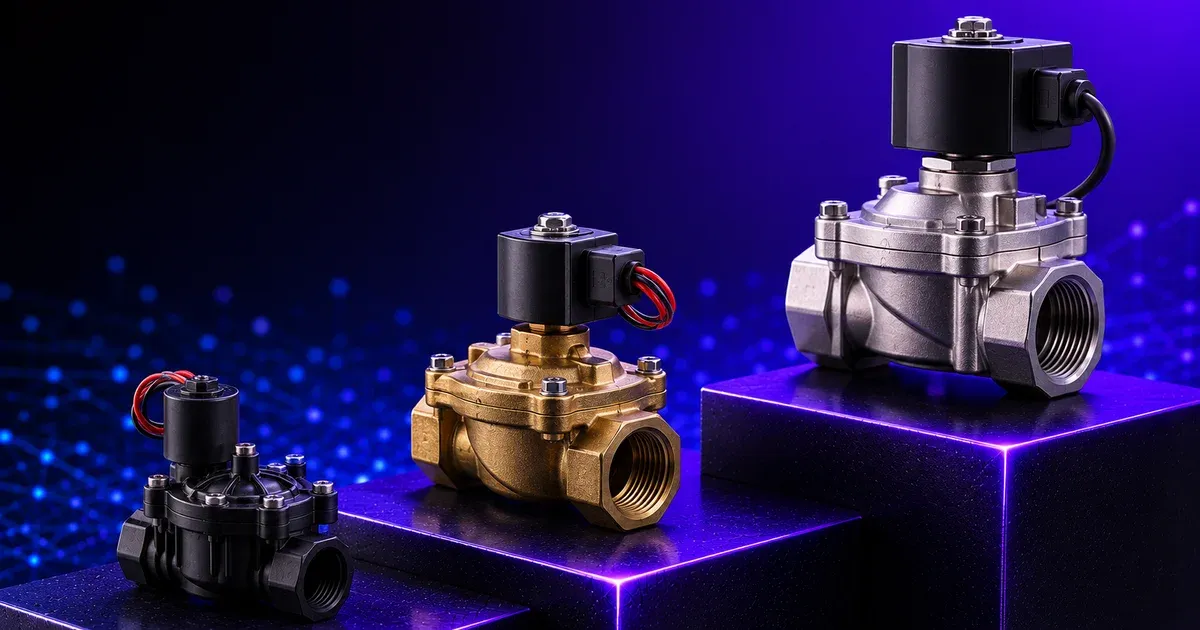
Quick picks by tier. Hobby → a plastic direct-acting valve (irrigation type). Maker/Prosumer → a brass pilot-operated valve with a continuous-duty coil. Commercial → a quality brass or stainless valve with the right seal (EPDM/Viton/PTFE) and an IP-rated coil. Hardened industrial / audited → a process solenoid or motorised process valve (ASCO, Burkert) with an ATEX coil and position feedback. Why each wins is below — but if you just need a name, start there.
The thing that actually bites you: direct-acting vs pilot-operated
The most common solenoid-valve failure isn't electrical — it's plumbing a pilot-operated valve into a line that can't drive it. Cheap, higher-flow solenoid valves are pilot-operated (servo-assisted): they use the line's own pressure differential to push the diaphragm open and closed, so they need a minimum pressure differential (often ~0.5 bar / 7 psi) to work at all. Put one on a gravity feed, a pump that idles at zero differential, or a vented tank and it simply never opens — or never seals. Direct-acting valves move the seat with the coil's own force, so they work from 0 bar but only at small orifice sizes. Get this fork wrong and the valve is dead on arrival regardless of how good it is.
The second trap is seal and body compatibility. The elastomer that seals the seat — NBR, EPDM, FKM/Viton, PTFE — has to match the media. EPDM swells in oils and fuels; NBR dislikes strong oxidisers; Viton handles fuels and many chemicals but not hot water/steam as well as EPDM. Run peroxide, pH-down, hypochlorite, fuel, or solvent through the wrong seal (or a plastic body) and it swells, hardens, or cracks within weeks. The valve still clicks; it just leaks or sticks.
Third: the coil duty cycle. A valve held energised 24/7 needs a continuous-duty (ED 100%) coil; a coil rated for intermittent use that you hold open all day overheats and burns out. And NC (closed without power) vs NO (open without power) decides what happens on a power cut — a real safety choice for dosing and water lines.
So the real question isn't "does it open at 12 V?" — it's "is it direct-acting or pilot for my pressure, rated continuous-duty, with a seal and body compatible with my media?"
The decision axes
- Direct-acting vs pilot-operated — sets the minimum pressure differential. The first thing to get right.
- Pressure range & orifice — min differential to operate, max working pressure, and orifice size (which sets flow/Cv).
- Seal & body vs media — NBR / EPDM / FKM(Viton) / PTFE seat and plastic / brass / stainless body, matched to the fluid and temperature.
- NC / NO fail state — what the valve does with no power; a safety decision for water and chemical lines.
- Coil duty cycle & voltage — continuous (ED 100%) vs intermittent; 12/24 V DC vs 24/120/230 V AC; IP rating of the coil.
- Flow medium — water, air, neutral gas, light oil, steam, aggressive chemical — each narrows the valve family.
- Hazardous area & feedback — ATEX/IECEx coils and position/limit feedback for process and safety duty.
*TierValveTypeMin pressure differentialBody / sealMediaCoil dutyInterface*Price (USD)**Best forHobbyPlastic direct-acting (irrigation)Direct-acting0 bar (works at zero)Plastic / NBRClean water, low pressureCheck rating12 V via relay$5–15Hobby tanks, gravity feedsProsumerBrass pilot-operated, continuous-duty coilPilot-operatedneeds ~0.5 bar+Brass / NBR-EPDMWater, air, light oilContinuous (ED100%)12/24 V via relay$15–40Pressurized water/air linesCommercialQuality brass/stainless + matched sealDirect / pilotper modelBrass/SS / EPDM/Viton/PTFEChemicals, hot water, hygienicContinuous, IP coilRelay / contactor$50–300Chemicals, wash-down, hygienicIndustrialProcess solenoid / motorized (ASCO, Burkert)Process valve + feedbackper modelSS / PTFE, ATEX coilSteam, aggressive, hazardousContinuous, ATEXRelay + position feedback$200–1500+Steam, hazardous areas, audited
Walking up the ladder
Hobby — plastic direct-acting valve ($5–15). The 12 V plastic valves sold for drip irrigation and small projects. Direct-acting, so they open from zero pressure, which is exactly why they're handy on hobby tanks and gravity feeds — but they're low-pressure, narrow-orifice, clean-water-only, and short-lived. Stop here if it's clean water, low pressure, intermittent, and non-critical.
Maker/Prosumer — brass pilot-operated valve, continuous-duty coil ($15–40). A 1/2" brass body widens pressure and flow and handles water, air, and light oil — just respect the minimum pressure differential (it won't open on a dead-head pump or gravity line) and pick a continuous-duty coil if you hold it open. Stop here if you have real line pressure and want dependable water/air control.
Commercial — quality brass/stainless valve with matched seal ($50–300). Now you're choosing the seal and body for the media: Viton for fuels/chemicals, PTFE for aggressive fluids, stainless for hygienic or corrosive service, plus an IP-rated coil and a real duty-cycle spec. Burkert/ASCO entry-level lives here. Stop here if you're handling chemicals, hot water, hygienic media, or wash-down environments.
Hardened industrial — process solenoid / motorised process valve ($200–1500+). ASCO, Burkert and similar with ATEX/IECEx coils, NAMUR mounting, steam/aggressive-media bodies, and position feedback (limit switches or a positioner) so the control system knows the valve actually moved. You need this tier if you're on steam, hazardous areas, aggressive chemicals, or an audited process that must prove valve state.
Interface & wiring notes (per tier)
- DC valve (12/24 V): drive the coil through a relay or a flyback-protected MOSFET from the Pi — never directly off a GPIO — and always put a flyback diode across the coil; the inductive kick will otherwise destroy the driver.
- AC valve (24/120/230 V): switch via a relay or contactor sized for the coil's inrush; keep mains wiring to code and the Pi side isolated.
- Continuous duty: if the valve is held open for hours, confirm an ED 100% coil and budget for the coil's steady heat in an enclosure.
- Feedback (commercial/industrial): read limit-switch or positioner contacts into the Pi so you log actual open/closed state, not just the command you sent.
A note on the click that lies: a solenoid clicking doesn't mean flow. A pilot valve with too little differential clicks and stays shut; a swollen seal clicks and leaks; a coil overheating from wrong duty clicks until it doesn't. Verify with a flow/pressure reading or a feedback contact, and match direct-acting/pilot, seal, body, and duty to your actual fluid and pressure before you trust the click.
How LoopString controls every tier — from one dashboard
Here's the part that makes the whole ladder moot from a software standpoint: a Raspberry Pi running LoopString's Node-RED templates drives a $8 plastic valve and an industrial process valve from the exact same dashboard — same open/close controls, same schedules and dosing recipes, same automation rules and activity log. Commands flow from the dashboard through the edge API (over Tailscale) to Node-RED on the Pi, which energises the coil via a relay; the control logic stays on the Pi. You can prototype a fill cycle with an irrigation valve and swap in a stainless process valve for production without rewriting your automation. Pick the tier your fluid actually needs using the table above, wire it to a Pi, and control it from anywhere at app.loopstring.io.
Useful next reads: the greenhouse and grow automation use case, the Raspberry Pi automation guide, and the Raspberry Pi industrial monitoring guide.
Frequently asked questions
Most often it's a pilot-operated valve without enough pressure differential. Pilot/servo-assisted valves use line pressure to move the diaphragm and need a minimum differential (often around 0.5 bar / 7 psi), so on a gravity feed or a dead-head pump they click but stay shut. Use a direct-acting valve for zero/low-pressure lines. A swollen or wrong-material seal can also make it click and leak or stick.
Related posts
- Dosing & Circulation Pumps: From Hobby Peristaltic to Industrial Metering Pumps — The Complete Quality-Tier Buyer's Guide
- Fans & Blowers: From PWM PC Fans to Industrial EC Blowers — The Complete Quality-Tier Buyer's Guide
- Dissolved Oxygen Sensors: From Galvanic Probes to Optical RDO — The Complete Quality-Tier Buyer's Guide